Kirgiz Ethnic Group
Introduction
The Kirgiz ethnic group, also known as the Kyrgyz, is one of the ethnic groups recognized in China. They primarily reside in Northwest China's Xinjiang Uygur autonomous region, with a rich cultural and historical heritage that spans several centuries. The Kirgiz people have a distinct identity characterized by their language, traditions, and way of life, which are deeply rooted in the nomadic culture of Central Asia. The Kirgiz have historically been known for their involvement in pastoralism, equestrian activities, and their unique cultural expressions.
History
The history of the Kirgiz ethnic group is intertwined with the broader historical developments of Central Asia. The Kirgiz people are believed to have originated from the Yenisei River region, migrating southward over the centuries. Their historical journey took them through various regions of Central Asia, where they interacted and mingled with other nomadic cultures. The Kirgiz have historically been associated with the Silk Road, serving as both traders and warriors who facilitated cultural and economic exchanges between the East and the West. Over time, they established themselves in the mountainous terrains, particularly in the Tianshan and Pamir ranges, where they engaged in transhumance, moving their herds between summer and winter pastures.
Demographics
Population Distribution
The Kirgiz ethnic group is predominantly concentrated in the Xinjiang Uygur autonomous region of China. Within this region, they are mainly found in the Kizilsu Kirghiz autonomous prefecture, which is named after them. The Kirgiz population is also present in smaller numbers in other parts of China, but Kizilsu remains their primary settlement area. Beyond China, the Kirgiz ethnic group shares close ethnic and cultural ties with the Kyrgyz people of Kyrgyzstan, where they form the majority population.
Languages
The primary language spoken by the Kirgiz ethnic group is Kirgiz, which belongs to the Turkic language family. Kirgiz is characterized by its use of the Cyrillic script in Kyrgyzstan, while in China, the language is written in a modified version of the Arabic script. The Kirgiz language, with its rich oral tradition, plays a crucial role in preserving and transmitting the cultural heritage and identity of the Kirgiz people. In addition to Kirgiz, many Kirgiz individuals in China are bilingual or multilingual, often speaking Mandarin Chinese or other regional languages.
Culture
Traditional Clothing
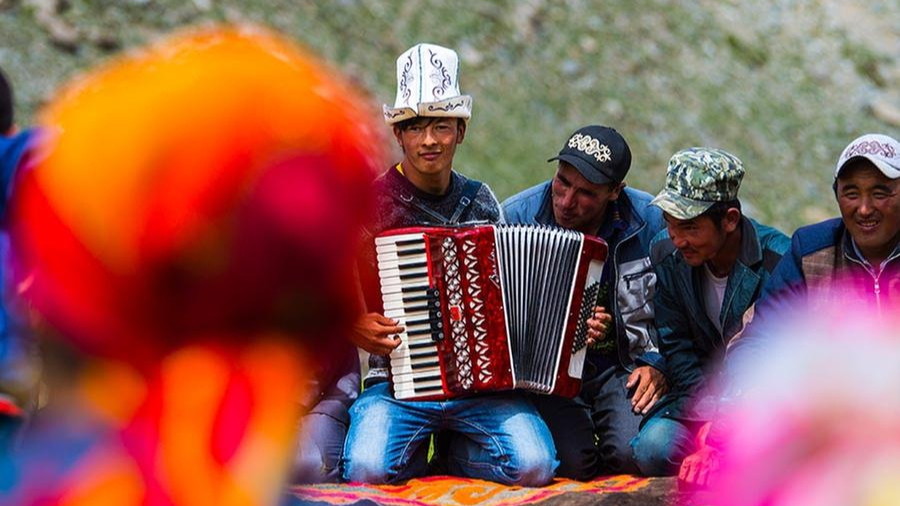
Traditional clothing is an important aspect of Kirgiz culture, reflecting their nomadic heritage and adaptation to the mountainous environment. Kirgiz men typically wear long coats known as "chapan" with wide sleeves, often made of wool or felt to provide warmth in the cold climate. These coats are usually worn over a shirt and trousers, accompanied by boots suitable for horse riding. Women wear long dresses with vibrant patterns, often layered with colorful vests or jackets. Headgear is significant in Kirgiz attire, with men wearing traditional hats called "kalpak," made from felt, while women adorn scarves or caps. The traditional clothing is not only functional but also serves as a symbol of cultural identity, with intricate embroidery and patterns that vary between different regions and communities.
Folk Music and Dance
Folk music and dance are integral to Kirgiz cultural expression, serving as a means of storytelling and communal bonding. Kirgiz music is characterized by the use of traditional instruments such as the "komuz" (a three-stringed lute), the "kyl kyyak" (a bowed instrument), and various percussion instruments. These instruments are used to perform epic songs and ballads that recount historical events, heroic tales, and everyday life experiences. Dance is often performed in groups, with movements that reflect the rhythms and themes of the accompanying music. The dances are usually performed during festivals, weddings, and other communal gatherings, showcasing the vibrant and dynamic cultural heritage of the Kirgiz people.
Cuisine
Kirgiz cuisine reflects the nomadic lifestyle and the natural resources available in their mountainous homeland. It is heavily influenced by meat and dairy products, with mutton, beef, and horse meat being staple components. A popular dish is "beshbarmak," which consists of boiled meat served with flat noodles and broth, often considered the national dish. Dairy products such as "kumis" (fermented mare's milk) and "kaymak" (a type of cream) are also central to their diet. Bread, in the form of flatbreads and pastries, is commonly consumed, often accompanied by meat dishes or tea. Kirgiz cuisine is not only a reflection of their resourcefulness but also plays a vital role in social and cultural gatherings, symbolizing hospitality and community.
Economy
Livelihood and Occupations
The traditional economy of the Kirgiz ethnic group is predominantly based on pastoralism and agriculture, reflecting their historical roots as nomadic herders. Livestock breeding, particularly of sheep, cattle, and horses, is a primary source of livelihood, with transhumance playing a crucial role in their economic activities. In addition to pastoralism, some Kirgiz communities engage in farming, cultivating crops such as wheat, barley, and vegetables, adapted to the mountainous terrain and climate. In recent years, there has been a growing diversification of economic activities, with some Kirgiz individuals engaging in trade, handicrafts, and tourism-related businesses. The development of infrastructure and services in Xinjiang has also opened up new opportunities for employment and income generation, allowing the Kirgiz to balance traditional livelihoods with modern economic pursuits.
Cultural Preservation and Promotion
Cultural preservation and promotion are critical concerns for the Kirgiz ethnic group, as they seek to maintain their unique heritage in the face of modernization and globalization. Efforts to preserve Kirgiz culture include the documentation and teaching of their language, the revival of traditional crafts and music, and the organization of cultural festivals and events. Institutions such as museums and cultural centers play a vital role in safeguarding and showcasing Kirgiz history and traditions, providing platforms for cultural exchange and education. Additionally, the Kirgiz community actively participates in initiatives aimed at promoting cultural tourism, highlighting their rich heritage as an asset for economic development and cultural diplomacy. Through these endeavors, the Kirgiz ethnic group strives to ensure the continuity and vitality of their cultural identity for future generations.








